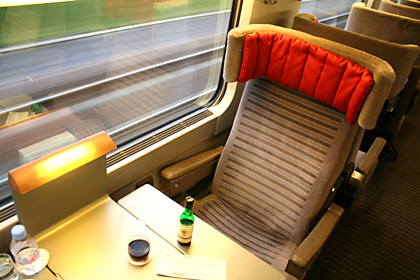
And the good news for anyone who has resolved to give up flying is that we are entering a new golden age of rail travel, with expanding networks, a revival of sleeper trains and Interrailing, along with a growing number of travel companies replacing flights with train travel.
Add in improved ferry services, a boom in remote hideaways, and alternatives to traditional destinations, and the outlook for anyone wanting to escape the headlines looks positively sunny.
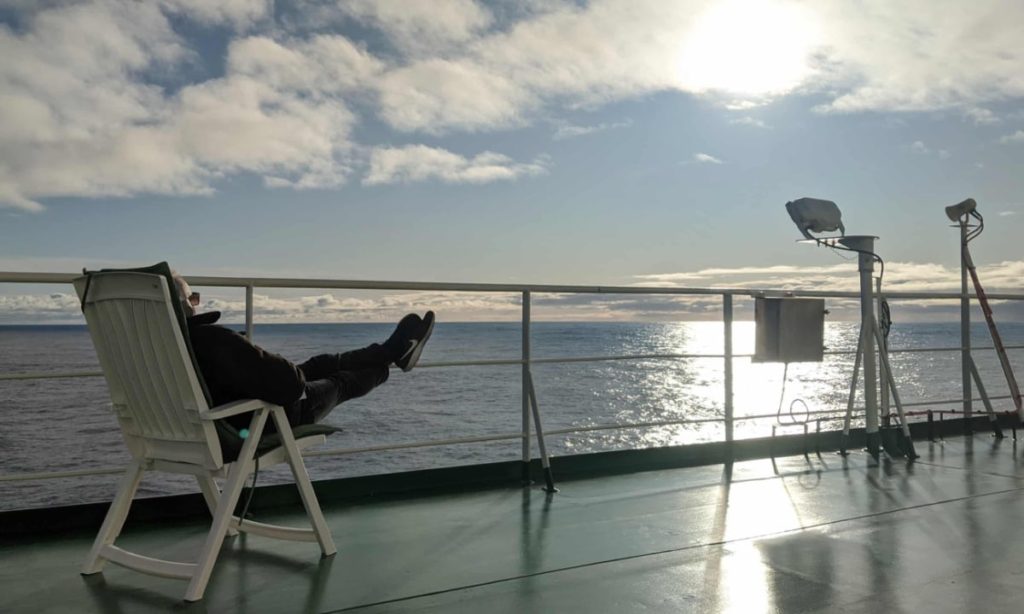
Sustainable travel within Europe often involves trading a plane for a train, but getting to Canada from Europe is more complex. A cargo ship became the obvious low-carbon choice.
The 15-day cargo ship passage from Hamburg to Halifax €100 a day – €1500
Train travel is a more rewarding, low-stress alternative to flying, which brings us closer to the countries we visit and reduces our contribution to climate change.
It’s time to rediscover the pleasure, romance & adventure of travel by train or ship.
This site explains how to travel comfortably & affordably by train or ferry where you might think air was now the only option. For help with train travel, ask the Man in Seat 61!
Although aviation currently makes up less than 5% of global emissions, this is because most people have never been on an aeroplane; the same people who will be hit first and hardest by climate breakdown.
For those who can afford it, flying can make up the single largest part of their carbon footprints. A return long-haul flight is roughly equivalent to driving for a year or eating a meat-heavy diet. Even if you take other measures to be environmentally friendly, one flight can wipe out those savings. Living sustainably whilst continuing to fly is impossible.
Greta Thunberg: The ‘flight shaming’ phenomenon is impacting the airline industry
Climate activists such as Greta Thunberg inspiring people to refuse travelling on planes — a new phenomenon dubbed “flight shaming” — has been linked to a slowdown in the growth of air travel that could hurt the industry, according to a new report.
A survey of 6000 Americans and Europeans by Swiss bank UBS has found one in five are flying less due to concerns about climate change, Reuters reported.
Contrary to what many believe, global aviation only contributes 2 per cent of greenhouse gas (GHG) emissions worldwide. That is still too high, but the industry aims to reduce net emissions by 50 per cent by 2050.
Carbon offsetting is another initiative being used.
The International Civil Aviation Organisation’s Carbon Offsetting and Reduction Scheme for International Aviation (CORSIA) is the first ever global sectoral agreement to introduce carbon pricing, based on the goal of capping net emissions at 2020 levels to ensure carbon neutral growth from 2020 onwards.
The consultation outlined a proposal to require all air travel providers and other providers of ticketed travel to give passengers the option to buy a carbon offset for their journey.
More fundamentally, in a net zero future every country and every sector will need to get emissions to zero – there will be no room for offsetting. UNEP’s position, that carbon offsets be seen only as “a temporary measure leading up to 2030”[2] reflects this.