Energy and Environment Policy Researcher at the Bright Blue think tank. He wrote an article in Prospect Magazine: “Why air travel is more sustainable than you think” Patrick explains why flying is really not as bad for the environment as you might think.
Topics: 00:52 Interview start with Patrick Hall – Bright Blue think tank 02:00 Article in Prospect Magazine: “Why air travel is more sustainable than you think” 06:02 The numbers explained. 10:45 Carbon offsetting 19:03 Emerging Responsible Tourism Trends 35.44 Pragmatism versus idealism: Climate action’s key debate 44:19 Space to get a funding boost – ethical questions to consider
Contrary to what many believe, global aviation only contributes 2 per cent of greenhouse gas (GHG) emissions worldwide. That is still too high, but the industry aims to reduce net emissions by 50 per cent by 2050.
“Some new aircraft use less than three litres of jet fuel per 100 passenger kms, matching the efficiency of modern compact vehicles”
UK airspace has not undergone significant changes since the 1950s. Outdated flightpaths often constrain aircraft from reaching their optimal cruising altitude more quickly, resulting in increased inefficiencies, greater fuel burn and subsequently more GHG emissions.
And given the skyrocketing interest in eco-friendly travels of late, it’s no surprise that predictions about 2020 have grown to include insights about emerging sustainability trends. Flying Less and Making Holidays Count.
The flight shaming movement is apparently having an impact.
A recent UBS survey showed 16 percent of Brits and 24 percent of Americans will fly less in 2020
Eurostar enjoys busiest August as passengers seek alternative to flying
Demand for sustainable travel is ‘an exciting time’ for the high-speed train service, says CEO busiest August ever, with more than a million passengers travelling on the cross- Channel train service in that month
The service appears to have benefited from increasing demand for an alternative to flying – a trend highlighted in Eurostar’s advertising campaign.
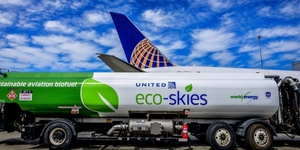
The carrier, which earlier this year agreed to purchase up to 10 million gallons of sustainable aviation fuel over the next two years, will look to collaborate with other environmentally conscious partners on this extraordinary initiative.
Among all airlines around the world, United holds more than 50% of all publicly announced purchase commitments to using sustainable aviation fuels and is the only U.S. carrier to currently use this fuel on a continuous basis.
Last week, Extinction Rebellion protesters, either oblivious to this rule or brave enough to test it, incurred the wrath of the literal East Enders when they staged a disruptive early-morning protest at Canning Town Tube station.
Just before 7am, a small group clambered atop a train and unfurled banners, stopping it from leaving the station.
Even the eco-friendliest of London professionals would have struggled to sympathise.
The assembled commuters, bleary-eyed and now increasingly late, responded by throwing food, drink, and insults at the protesters, and by dragging one down, kicking if not screaming, from the train. It all came dangerously close to mob violence.