Guyana has been bagging ecotourism awards the world over.
But as the former British colony begins to exploit its vast oil reserves, are its unique tourism draws under threat?
“Guyana has been working to provide the necessary legislation, institutional structures and management systems to protect against environmental degradation, and to combat corruption,” says Bryan, who hails from Trinidad and Tobago, the Caribbean’s largest producer of oil and gas. “These steps are essential to avoiding the ‘resource curse’ where the destabilization of traditional economic sectors occurs as the country becomes overly dependent on exports of a single commodity.”
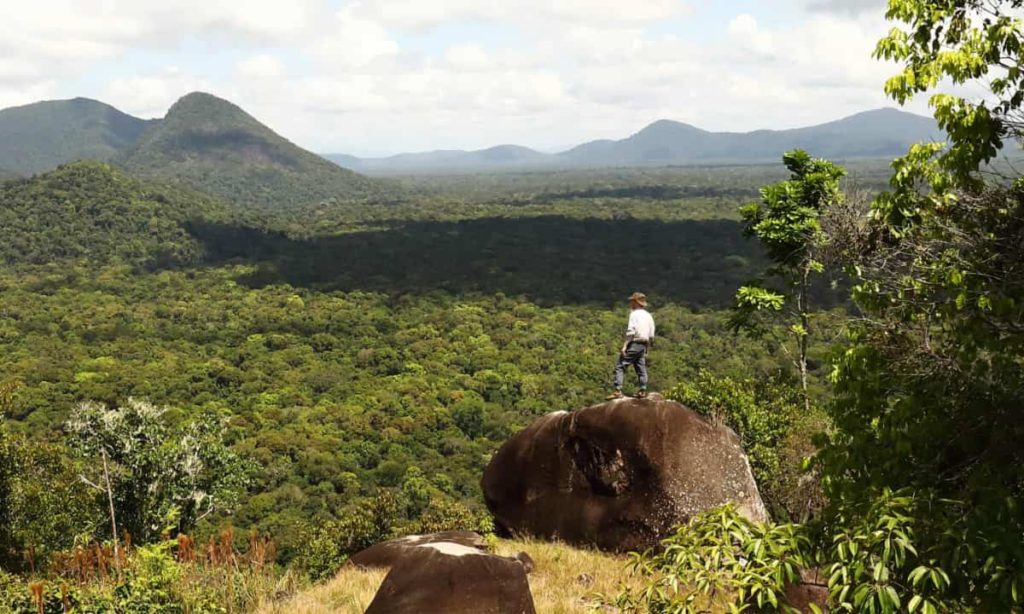
Even today the little-known South American country of Guyana remains uncharted territory for man, boasting around 85% forest cover from one of only four primary rainforests in the world.
Perhaps it comes as no surprise then that this mysterious land of dense jungle and hidden corners was the inspiration behind Sir Arthur Conan Doyle’s The Lost World.
The Discover Guyana pages are still active and sharing images and content that will inspire, remind travellers that there is still plenty of beauty in the world, and give them a taste of what discoveries await them in Guyana.
Rovin starts doing the maths for me. “We have about 350 square kilometres of jungle and have applied to take over another 350 of what is now state land. We get about 200 visitors a year and we want 400, no more. We don’t want to be rich, but we want to keep our forest. We do need money for medicines, education and supplies.”
Take away the tourists and the need for an income would soon drive these communities into the arms of loggers, ranchers, goldminers and oilmen.
“You know what,” I say to Rovin, “your jungle is full of treasures that are better than gold or oil.”
Guyana intends to become a low-carbon, ‘green state’, with eco-tourism a major feature. But the country is also poised to become the Western Hemisphere’s next big oil producer.
The forests of the Amazon are an important carbon sink
Importance of preservation rainforests
Climate change and the importance of preservation rainforests as a carbon sink capture and store naturally – without cost – an estimated 1.3 billion tonnes of carbon per year